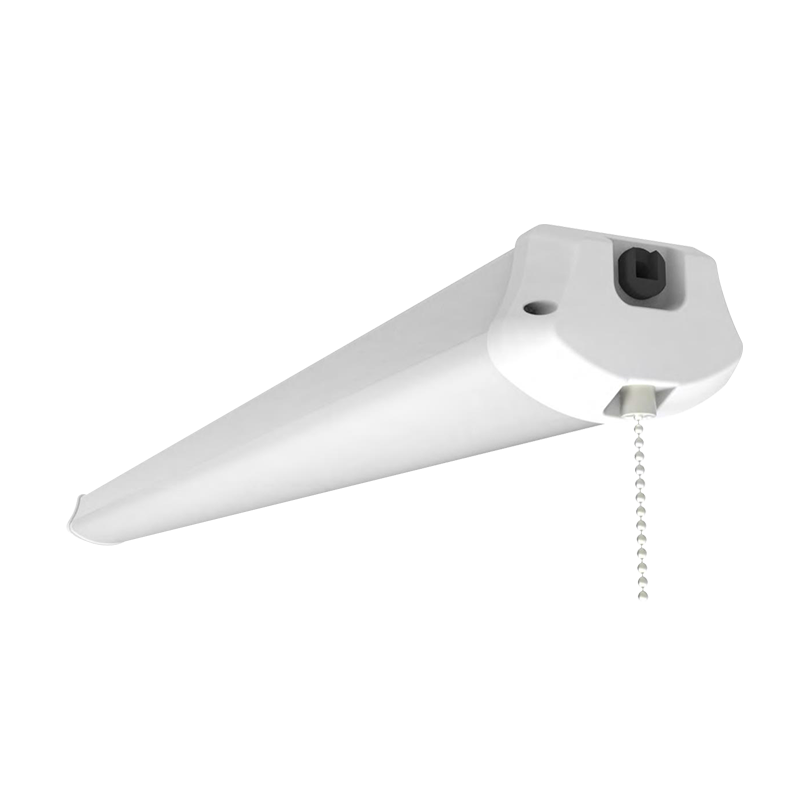
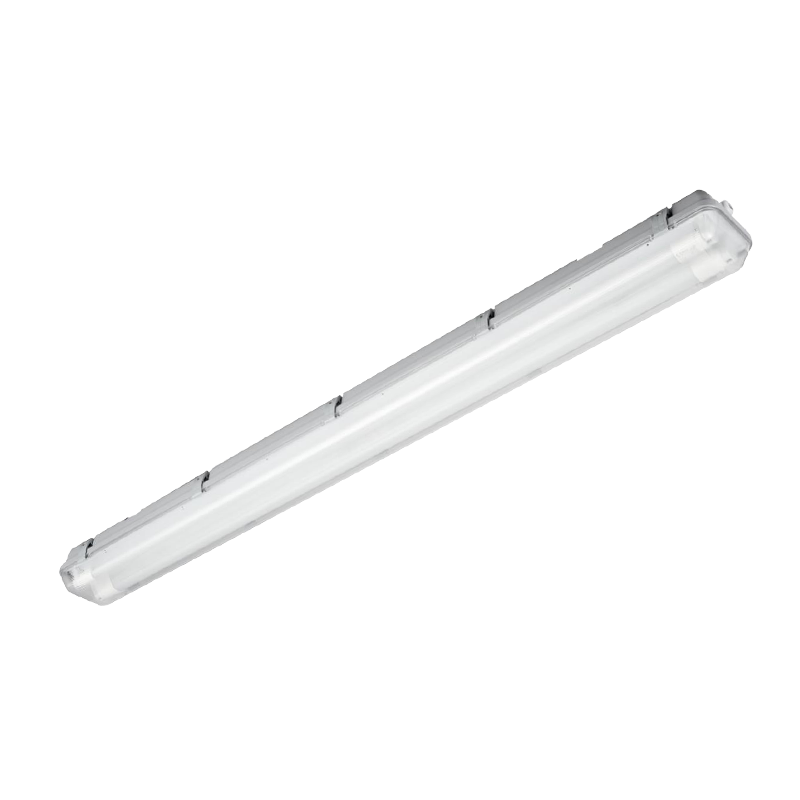
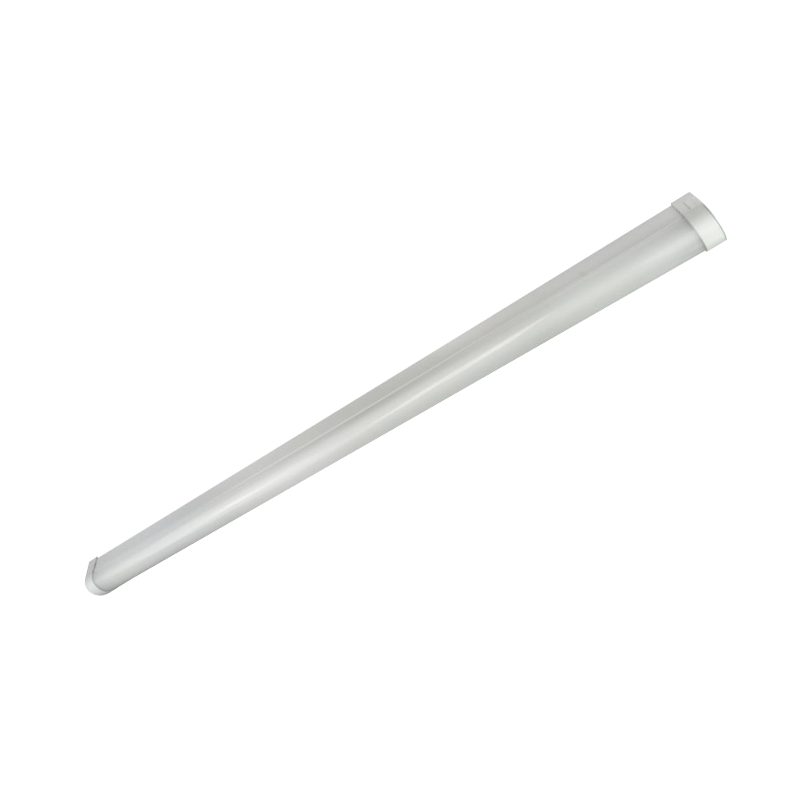
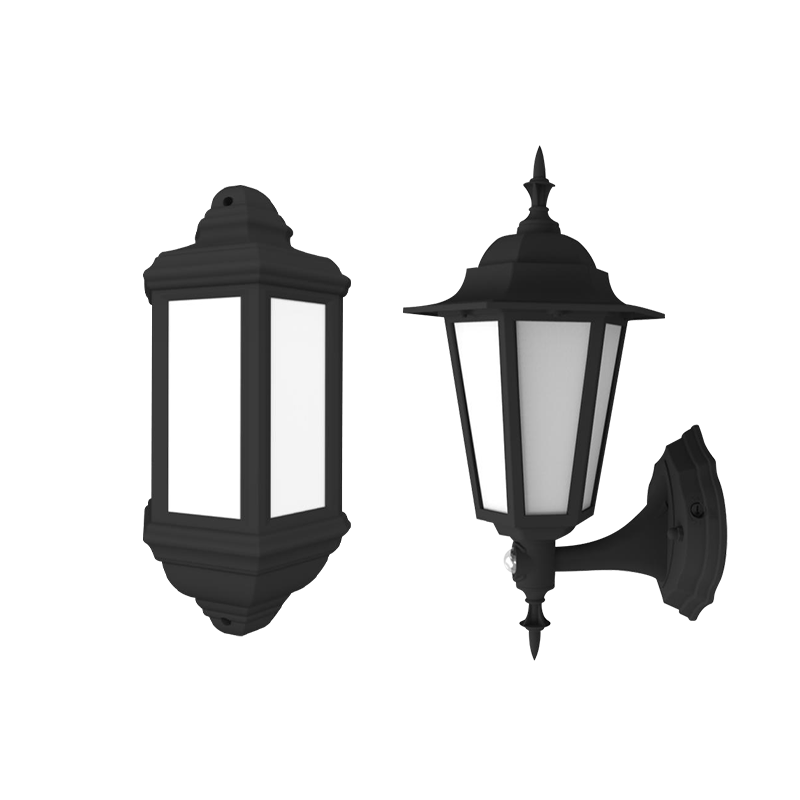
With the advancement of lighting technology, LED fixtures have become a mainstream choice for modern lighting. Besides being energy-efficient, their dimmable functionality has also garnered significant attention. 디밍 프로토콜의 작업 원리를 이해하면 사용자가 정보에 입각 한 선택을하는 데 도움이 될뿐만 아니라 조명 설계자에게보다 창의적인 옵션을 제공합니다.
1. 0-10V Dimming: Simple and Reliable Analog Control
0-10V dimming is one of the oldest and most widely used dimming technologies. It operates based on analog voltage signals. This protocol sends a voltage signal to the LED driver via a separate control line (typically a pair of low-voltage signal lines).
How it works: When the control voltage is 10V, the driver outputs maximum current, and the lamp brightness reaches 100%. When the voltage drops to 1V, the brightness drops to 10%. When the voltage reaches 0V, the lamp brightness is theoretically reduced to minimum or completely off. However, to avoid unstable flickering below 1V, some 0-10V drivers set a minimum brightness value, such as 10%. This linear relationship makes brightness adjustment intuitive and smooth.
Advantages:
Simplicity: The circuit structure is simple and the cost is low.
높은 호환성 : 오랜 역사로 인해 시장에는 많은 수의 호환 컨트롤러와 드라이버가있어 통합이 쉽습니다.
Independent Control: Each luminaire can be independently connected to a pair of control wires for individual dimming.
Disadvantages:
Limited Control Accuracy: Analog signals are susceptible to line resistance and electromagnetic interference, resulting in inaccurate dimming.
Complex Wiring: Each luminaire requires individual wiring, which is a significant and unsightly task for large lighting projects.
Unidirectional Control: Commands can only be sent from the controller to the driver; bidirectional communication or status feedback is not possible.
2. DALI Dimming: Powerful Digital Intelligent Control
DALI (Digital Addressable Lighting Interface) is a digital dimming protocol designed specifically for lighting systems. It represents the future of intelligent lighting, offering features far beyond traditional analog dimming.
How It Works: The DALI system implements digital communication over a two-wire bus. Each DALI driver has a unique address, allowing the controller to control each luminaire individually or in groups. 컨트롤러는 도구 주소, 밝기 값 및 디밍 속도와 같은 정보를 포함하는 전압 신호가 아닌 디지털 명령을 보냅니다. Because it uses a digital signal, DALI is immune to electromagnetic interference and offers extremely high dimming accuracy.
Advantages:
Precise Control: Digital communication ensures precise and consistent dimming, allowing for smooth and stepless brightness adjustment.
Flexible Grouping: Users can arbitrarily group lamps to implement complex functions such as scene modes and timed on/off.
양방향 통신 : 컨트롤러는 결함 정보 및 작동 시간과 같은 운전자로부터 상태 피드백을받을 수 있으며 유지 보수 및 관리를 용이하게합니다.
Simplified Wiring: All lamps share a single DALI bus, significantly simplifying wiring and reducing installation costs.
Disadvantages:
Higher Cost: DALI drivers and controllers are more expensive than 0-10V drivers.
Complex System: Requires professional programming and debugging to fully implement functionality, potentially overly complex for small projects.
3. Triac Dimming: Seamless Compatibility with Traditional Applications
Triac dimming, also known as thyristor dimming, is a dimming technology derived from traditional incandescent lamps. 사이리스터 (SCRS)를 사용하여 AC 전원 공급 장치를 선도 또는 후행 가장자리로 위상 절단하여 전압 파형을 제어 램프 전원으로 변경합니다. 작업 원리 : Triac Dimmers는 전도 각도를 제어하여 AC 전원 공급 장치의 각 반주기 동안 전압 파형의 일부를 가로 채 웁니다. For example, if the conduction angle is 90 degrees, only half the power is delivered to the lamp, resulting in reduced brightness. LED 비품의 티리 스터 (TRIAC) 디머 드라이버에는이 중단 된 전압 파형을 인식하고 그에 따라 출력 전류를 조정하여 밝기가 변경되는 내장 회로가 있습니다.
Advantages:
No Additional Wiring: Utilizes existing AC power lines, eliminating the need for additional signal wiring, making installation very simple.
High Compatibility: Compatible with traditional incandescent dimmers, facilitating retrofitting into older lighting systems.
Low Cost: TRIAC dimmer drivers are relatively inexpensive, making them suitable for home and small commercial applications.
Disadvantages:
Narrow Dimming Range: Effective dimming is typically limited to 20% to 100%. Below 20% may cause flickering or instability.
Compatibility Issues: Different drivers have varying compatibility with thyristor dimmers, requiring a matching test. Failure to do so may result in flickering, unusual noise, and other issues. Unsmooth dimming: Due to phase-cut control, the dimming process may not be as smooth as digital dimming.



No.8, No.8, Ankang West Road, Zonghan Street, Cixi City, Zhejiang Province, P.R. China
0086-574-6320 0283
저작권 © Ningbo Longer Lighting Co., Ltd.
모든 권리 보유.